

What Rights Do I Have to My Wedding Photos?
There is a moment, usually somewhere around signing the contract, when a lot of couples pause. You are reading through everything, feeling organised and grown-up about it all, and then you hit a line about copyright. And a small voice goes: hang on. What are my rights to wedding photos I have paid for, and do I not actually own them?”
It is one of the most common questions I get, and one of the most misunderstood. So let me talk you through the rights to wedding photos you get as a couple, in plain English. What you can do, what you can’t, and why it works the way it does. No legal jargon dressed up to sound clever. Just the honest version, the way I would explain it to you on a consultation call.
I am a Bristol documentary wedding photographer who shoots natural, unposed wedding photos, and I have been doing this for over 13 years. I have had every version of this conversation, including the slightly awkward ones. By the end of this, you will know exactly where you stand. And you will have a good sense of what a fair photographer should be offering you, which matters a lot if you are still choosing who to book.

The Short Answer: You Get a Licence, I Keep the Copyright
Here is the whole thing in one breath. Your rights to wedding photos come as a personal-use licence. I keep the copyright.
What that means in practice is lovely and simple. You can print your photos, share them, post them on social media, put them on your wall, send them to your nan. You can use them freely for anything personal. The licence is yours, and nobody is going to police your family WhatsApp group.
The copyright, though, stays with me as the photographer. And I know how that can sound at first. You paid for the day; it is your wedding, your faces, your people. Why would you not own the photos?

Because that is simply how UK law works. Under the Copyright, Designs and Patents Act 1988, whoever presses the shutter owns the copyright, even when they have been hired to do it. It is not a sneaky clause I invented. It is the default legal position for every commissioned photographer in the country. Your rights to wedding photos come as a licence to use the images, and the photographer holds the copyright. Some couples find that surprising, which is fair enough, but it is completely standard and it is not a catch.
What Can I Actually Do With My Wedding Photos?
This is the part people worry about, and it is the part where I can put you at ease quickly. Your rights to wedding photos under a personal-use licence are genuinely generous.
Print them, share them, post them
Anything personal is yours to do. Print a single frame or a hundred. Order canvases. Make an album. Post your favourites the morning after and tag whoever you like. Send the full gallery to family. Frame one for your parents as a gift.
You are not asking my permission for any of this, and you never need to. A personal-use licence covers exactly this kind of everyday sharing and printing, which is the vast majority of what couples ever want to do with their photos anyway.

Where the line sits
The line is commercial use. You cannot sell the images. You cannot enter them into a competition as your own. And you cannot hand them over to a third party, like one of your wedding suppliers, to use for their marketing without permission. More on the vendor side of that in a moment, because it is worth understanding properly.
There is one more thing on the list, and it is the one people forget: you cannot edit the photos. That one deserves its own section, so hold that thought.
Can I print my wedding photos anywhere I like?
Yes. Photobox, a high-street lab, a professional printer, wherever suits you. I do not lock your printing to a specific service, and I would gently side-eye any photographer who does. Your personal-use licence includes printing where you choose.

I do offer prints, albums and other lovely things after your gallery lands, because plenty of couples would rather I handle it and get it right. But that is an offer, not a requirement. If you want to go your own way, go your own way. You will never be trapped into buying anything from me.
Why Can’t I Edit My Wedding Photos? And What Counts as Editing
This is the rule that catches people out most, usually with the best intentions. So let me be clear about what editing actually means here, because it is broader than people expect.
What counts as editing your wedding photos?
Editing includes cropping, adding a filter, retouching, smoothing skin with an app, adjusting colours, or running the image through any of the apps that promise to improve it in one tap. All of that changes the photo I delivered. So all of that crosses the line.
Why the edit is where my rights matter
Here is why I care about it, and it is not ego. The edit is where the photo actually becomes mine. The colour, the mood, the light, the way a frame feels. That is the part you booked me for, and it is the part that carries my name. When one of my images goes out into the world with a filter slapped on top, it stops looking like my work, but it is still attached to me. Under UK law, this ties into a photographer’s moral rights, which include not having your work distorted and being credited as the person who made it.

Adding text is the one that depends. Sometimes it is completely fine, and sometimes it changes the whole feel of the image, so just ask me. I am not precious for the sake of it.
Which brings me to a story. I once had a couple ask me to change the sky in one of their photos to pink, instead of the golden-hour light that was actually there. So I did it. I made the version they asked for, showed it to them, and they looked at it and quietly agreed it did not look good. They did not want it after all. That is usually how it goes. Trust the eye you hired.
You might notice I do not watermark my photos anymore. I used to. The idea behind a watermark is to stop people from modifying or lifting your images, and it is the same instinct as the no-editing rule. But honestly, if someone is determined to take your work, a watermark will not stop them. So I let the photos speak for themselves and trust the people I work with.
Why Don’t I Hand Over the RAW Files?
Ah, the RAW files. This is the other big one, and it comes from a completely reasonable place. If you have paid for a full day, surely you should get every single file, right?
RAW files are unfinished ingredients
Think of a RAW file as a raw ingredient rather than a finished dish. It is flat, unfinished, and not meant to be seen. A chef does not send you home with a bag of uncooked ingredients and call it dinner. The RAW is the starting point. The photo is what I make from it, using years of experience to choose the frames that matter and finish them the way they are meant to look.
There is a reputation side too. An unedited or badly-edited image with my name on it does me no favours, and it does not serve you either, because it is not the standard of work you actually hired. So the finished gallery is what you get, and it is the best of your day, properly finished.
When someone asks for all the files
I have had the “can I just have all the files, even the rejects” request. Once it came because a relative of the bride was a photographer and wanted the lot. I was as accommodating as I could be. I explained everything patiently, and I also held my ground, because part of my job is standing up for the work I create. We got there in the end, kindly. There is a reason you choose your photographer in the first place. You trust their eye, their process, the candid, documentary style that made you book them, and their years of deciding which 400 frames from thousands actually tell the story of your day. Handing over the raw pile undoes the entire point of that trust.
Can I buy full copyright to my wedding photos?
If you genuinely do want to own the full copyright outright, that is possible. It is a separate arrangement, costs considerably more, and is set out in its own contract. It is rare, but the option exists. You can see how I structure things on my collections and pricing page.
What About Vendors, Magazines and Privacy?
This is where your rights and mine meet other people, so it is worth understanding how it works. Wedding suppliers love a good photo, and they will often want to use yours.
Suppliers using your photos
If your venue, florist, planner or hair and makeup artist wants to post your photos on their social media, I genuinely do not mind. All I ask is that they tag my business. That is the deal, and it is a fair one.
Where it changes is proper promotional use. If a supplier wants to use the images in an advert, especially one where they would rather not tag anyone, that needs my permission and usually a fee. It is the same principle behind why photographers ask vendors to license images rather than take them for free, because that image is my work being used to sell someone else’s business.
I put all of this in my contract, and I mention it to you upfront. So when you get your gallery and start sharing it with your suppliers, you already know the rules and can pass them on. No awkwardness, no surprises.
My side of it
Keeping the copyright means I can use your photos in my portfolio, on my website and on my social media. It is how photographers show the work and how future couples find us. But I hold that lightly and with respect for your privacy.
If I want to send your photos to a magazine, a blog, or any platform to be featured, I ask you first. Every time. And if there are children at your wedding, I make a note of that and treat it carefully.
If you want it all kept private
Some couples simply do not want their wedding online, and that is completely valid. You can opt for full non-disclosure, where I agree not to post or use any of your photos on social media or in marketing. There is a fixed fee for it, because it means giving up the way I would normally share the work, and it is written into the contract so you are fully protected.
What If Something Goes Wrong? How Your Photos Are Protected
Once you understand that I hold the copyright and the files, the next fair question is: so what happens if something goes wrong? It is a good question, and here is how I answer it.
I shoot on cameras with dual card slots, which means every photo is written to two cards at the same time as I take it. If one card fails, the other has it. Once I am home, your photos go to multiple places: an external drive, my computer, cloud storage and your online gallery. Losing your wedding would take several separate things failing at once, which is exactly the point of backing up that many times.
On top of that, I carry professional insurance through PolicyBee, and everything is set out in a proper contract, including the exclusions that protect both of us if genuinely unavoidable things happen, like equipment being tampered with or stolen. If you want a sense of the practical things worth nailing down before the day, my wedding photography checklist covers a lot of it.
A couple of practical notes on your side. Your private gallery stays available for 1 year after I deliver it. You can download everything from there in full resolution and web size. You also get your photos on a flash drive, along with some printed images, in a personalised wooden box that is genuinely lovely to open. One honest piece of advice: please do not treat the gallery as your only copy. Download your photos and back them up somewhere of your own too. Galleries are not meant to live forever.
Is This Fair to Couples? My Honest View
I will be straight with you, because that is more useful than pretending there is nothing to talk about. There are things in this industry I do not love. Photographers who bury every image under a heavy watermark forever. Ones who charge for every single print and lock your gallery behind it. Ones who make you feel like you are renting your own wedding back from them.
I try to find the balance. I need to protect what I make, because that work is part of who I am as a photographer, with a background in photojournalism and a Master’s in the craft behind every frame. But protecting my work should never mean squeezing you. You should feel looked after, not fenced in. If you want to know more about how I actually work, there is a bit about me and my approach here.
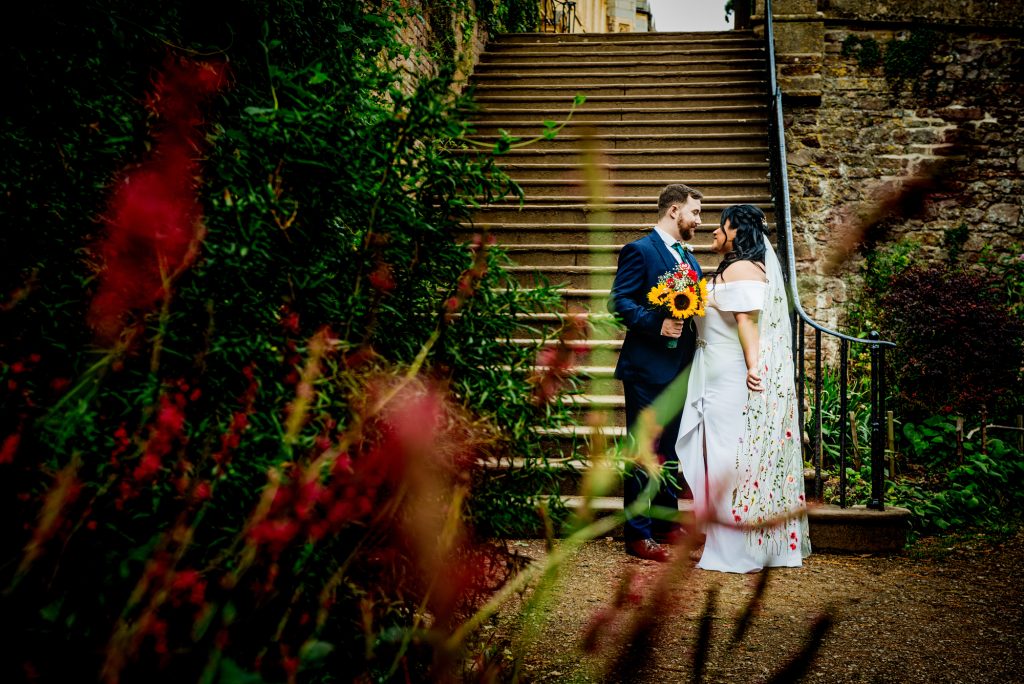
The biggest misconception couples arrive with is that keeping the copyright somehow takes something away from them. It does not. You can still print, share, post and enjoy your photos to your heart’s content. Nothing is taken from you. The copyright is really an attachment between me and the work I created, and it is not a leash on what you get to do. You will feel none of it in day-to-day life. What you will feel is that you were in careful, professional hands, and that the way your photos are handled is normal, legal and above board.
So, What Rights Do You Have to Your Wedding Photos?
To pull it all together. You get a personal-use licence, which lets you freely print, share and enjoy your photos wherever and however you like. You do not get to sell them, edit them, or pass them to third parties for commercial use, and you do not get the RAW files, because the finished gallery is the work you actually hired. And the copyright stays with me, which protects the craft you chose me for in the first place.
Ready to start
Planning your wedding?
A good photographer will explain every bit of this openly, before you sign anything, so you never feel caught out. That is the real signal to look for when you are choosing someone. If you are planning your wedding and this is the kind of calm, honest approach you want, fill in the enquiry form and tell me what you are planning. I would love to hear about your day.
Let’s start our journey
Start by filling in the enquiry form, and we’ll take it from there. Don’t worry, you don’t need everything planned out yet. That’s why we are here, to help you on the way!
Hit send, and I’ll be in touch within 2 working days (I promise).
