

Winter Wedding Planning
A Bristol Documentary Photographer’s Honest Guide
If you have started reading about winter weddings, you have probably noticed that everything sounds the same. Frosted air. Twinkling fairy lights. A snowy backdrop nobody can guarantee. A lot of it reads more like venue marketing than a useful guide to actually planning the day.
I have photographed winter weddings across the UK and Europe for 13 years. The real thing is quieter, slower, and more interesting than the version you read about in bridal magazines. It is also more practical and more flexible than the warnings about short days and bad light would have you believe.
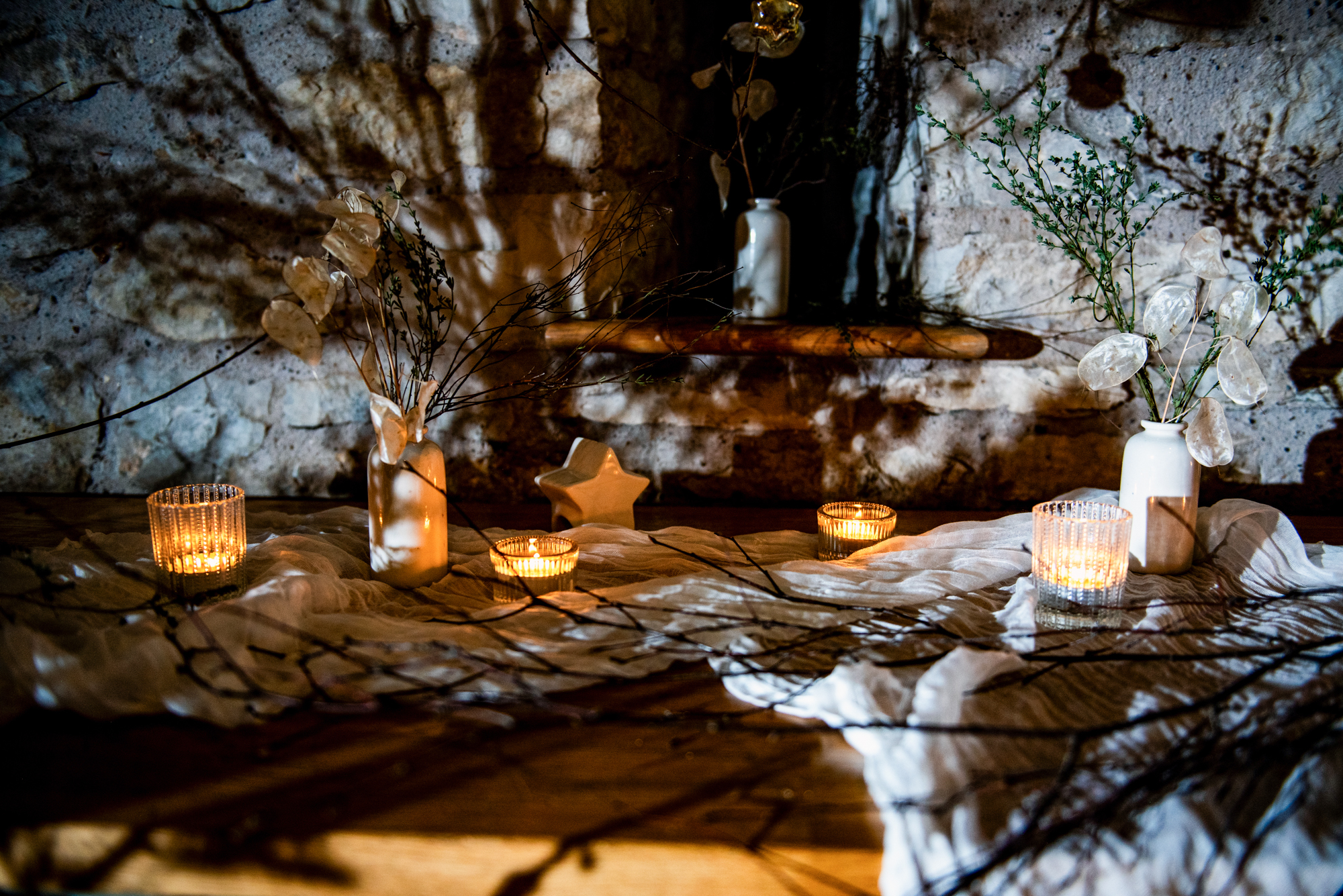
This guide is for couples weighing whether a winter wedding is right for you. I will cover what the day actually feels like, how to plan the timeline around the light, what to do about photos, which colours work, which venues suit the season, and the questions everyone asks but rarely gets a straight answer to.
None of the usual industry framing. No scare stories about the cold or the dark. Just honest answers from someone who has been there in December.
Why Winter Weddings Are Having a Moment
Something has shifted in the last few years. The wedding industry used to revolve around the summer months, with everything outside May to September treated as backup. That is no longer how couples plan.
October is now nearly as popular as the peak summer months, according to the UK Wedding Industry Report from Sonas, and search interest for autumn and winter weddings has overtaken spring and summer. Suppliers have noticed. Venues are priced accordingly.
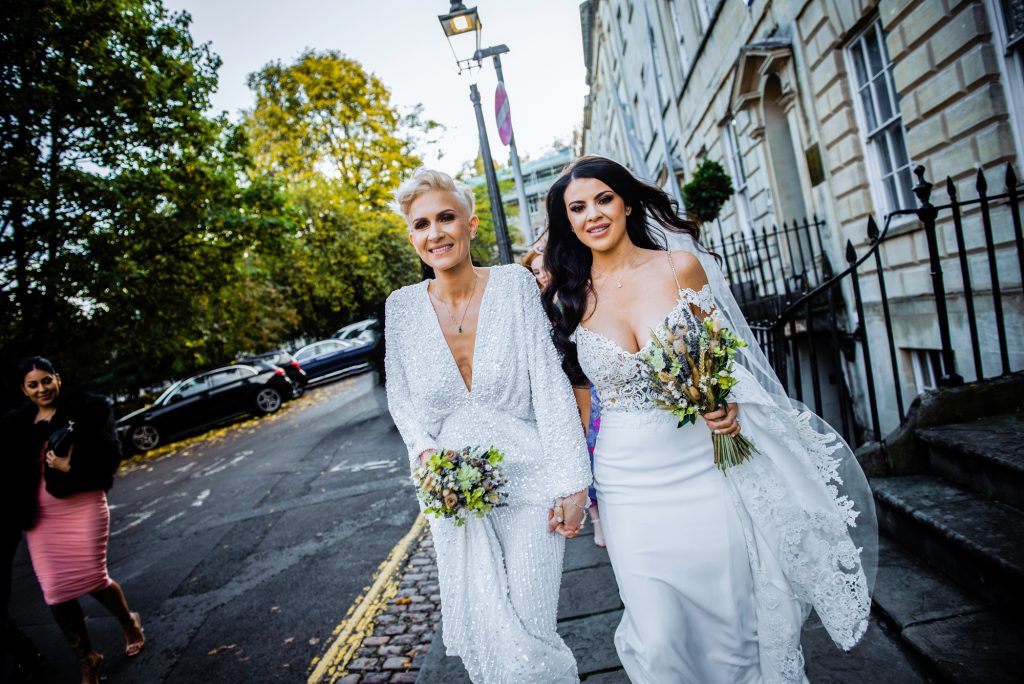
Are winter weddings uncommon?
Less common than summer weddings, yes, but not nearly as rare as they used to be. The ONS marriage data for 2023 shows August as the most popular month, accounting for 14.3% of marriages, with the winter months at the quieter end of the calendar.
What is changing is the pattern. Couples are choosing winter on purpose rather than as a fallback. October has climbed to nearly summer-level popularity, and the gap between peak and off-peak is shrinking each year.
Translation: you are not booking an obscure season. You are part of a quiet trend that has been growing for a while.
What is the rarest month to get married?
January. According to the ONS, just 2.6% of marriages in England and Wales took place in January 2023, making it the least popular month for both marriages and civil partnerships.

Christmas Day and Boxing Day are the rarest single dates of the year. There was 1 marriage recorded on each in 2023.
None of this should put you off. Quiet calendars mean better venue availability, more attentive suppliers, and a calmer pace of planning. A January wedding has its own kind of light you simply cannot get in August.
What is the 50/20/30 rule for weddings?
It is a simple budget framework. You allocate 50% of your wedding budget to essentials like venue, catering, and photography, 20% to your personal priorities (the things that matter most to you specifically), and the remaining 30% to flexible or discretionary items.
A winter wedding works well with this structure because off-peak pricing gives that essentials line item more room to breathe. The same venue might charge 20 to 30% less in winter than in peak summer, which either reduces your overall budget or frees money for the parts of the day you care about most.
Worth saying that this is a guideline, not a law. Plenty of couples ignore it entirely and still end up with the wedding they wanted. The off-peak season runs roughly October to April in the UK, and the savings are real if you book within it.
What a Winter Wedding Day Actually Feels Like
This is the part nobody writes about properly. People describe winter weddings in mood-board terms (velvet, candles, jewel tones) without describing the actual experience of being inside one.
Here is what 13 years of standing in winter ceremonies has taught me.
The light, and why it is beautiful, not just shorter
Winter light is low, soft, and slow. The sun does not climb high enough to cast harsh shadows, so faces read all day evenly. Skin looks calm. Whites stay white instead of going blue or grey. Even the famously grim British overcast has its own quality once you stop fighting it.

The cliché is that winter daylight is a problem. It is, if you are expecting a long, bright afternoon outside. But if you plan around it, the light you do get is some of the best of the year. Golden hour starts at 3pm and lasts until the sky gives up. You do not have to chase it.
The atmosphere without the cliché
Cosy is the word everyone reaches for. It is the right word, but it is shorthand for something more specific.
People who walk into a winter wedding venue do not behave the way they do at a summer one. There is no garden to wander out to, no sun-warmed lawn to spread across. So they stay closer together. They drink hot drinks. They sit down sooner. They talk to each other for longer.
What you get is a kind of natural intimacy that summer weddings have to work harder to create. It is not engineered. It just happens when the day pulls everyone indoors.
How people settle into the day differently
Most couples I work with come in nervous about being photographed. Whatever the season, the nerves usually drop within the first 20 minutes once the day is actually underway.

Winter weddings tend to accelerate this. The lower energy of the season, the candlelit rooms, the smaller distance between people, all of it works against the wedding-day adrenaline that keeps couples stiff in summer photos. By the time we get to portraits, most have already forgotten the camera is there.
How Do You Plan a Timeline Around Short Winter Days?
This is the practical bit. If there is one thing that determines whether a winter wedding feels rushed or roomy, it is when you start the day.
Sunrise and sunset data for Bristol show that sunset hits around 4 pm in December and January, with usable daylight tapering from about 3 pm. Plan around that, and the rest tends to fall into place.
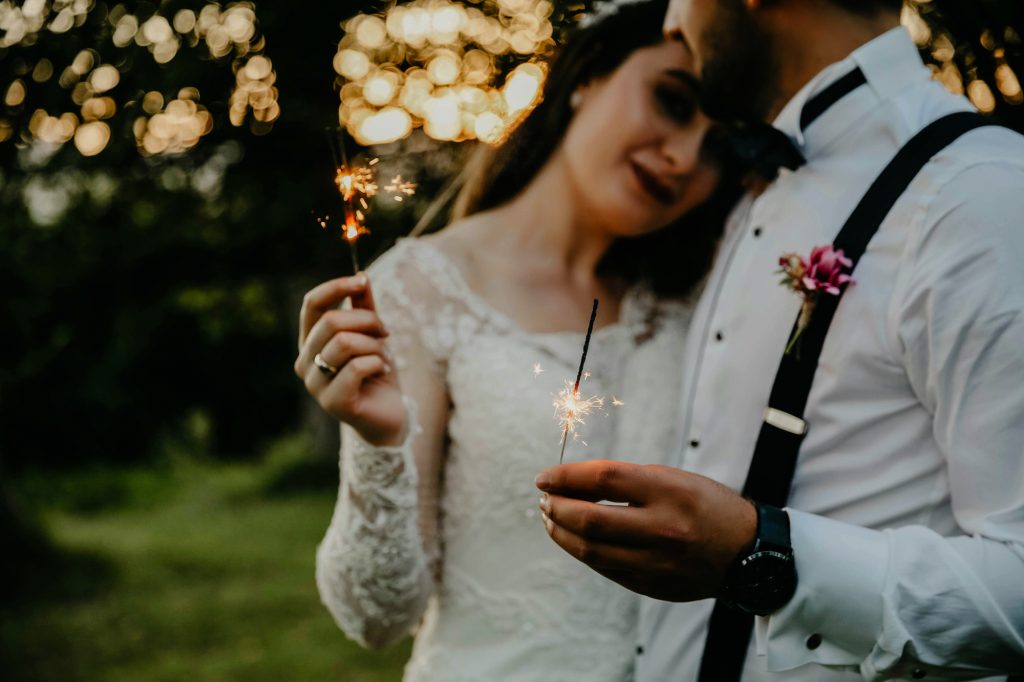
What time should the ceremony actually be?
For a December or January wedding, 1 pm is the most flexible ceremony time. It gives you around 2 hours of usable daylight after the ceremony, which is enough for couple portraits, family groups, and a relaxed transition to the reception.
A 2 pm ceremony works if you are doing a first look or if your portraits are not weather-dependent. A 3 pm ceremony locks you into evening photography for everything except whatever happens during the ceremony itself. None of these is wrong. They just produce on different days.
For November or February, you have a little more flexibility. The light holds longer, and a 2 pm ceremony is more comfortable.
When to fit portraits and family photos
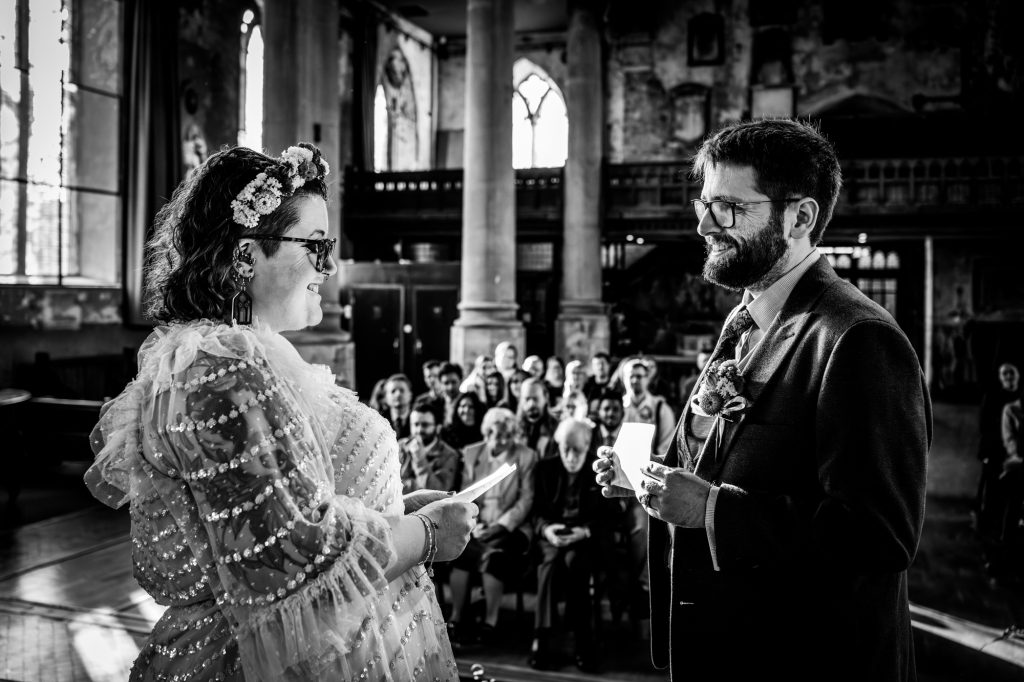
The bulk of your daylight portraits will happen between the end of the ceremony and dusk. Group photos take longer than couples expect, even in good light. In winter, you want them prioritised early, while the light is still working.
This is where a clear running order matters more than usual. If you want a structured guide to mapping this out properly, I have written a longer piece on how to build your wedding day timeline that goes through the timings in detail.

The first look question and when it earns its place
A first look is when you meet each other privately before the ceremony, with the photographer present. It is not traditional in the UK, and not every couple wants it.
But for a winter wedding, it is genuinely useful. It moves your couple portraits into the daylight window without compressing everything after the ceremony. If you would otherwise have to choose between a confetti shot and a couple portrait at 3 pm, a first look removes that dilemma.
If a first look does not feel right for cultural, religious, or personal reasons, do not do one. Plan an earlier ceremony instead.
What Are the Best Colours for a Winter Wedding?
This is one of the most-searched questions, and the answers online tend to converge on the same colours: deep burgundy, forest green, navy, ivory, and gold. They are correct. They are not the only option either.
Here is what actually matters about colour at a winter wedding, beyond the trending palettes.
The expected palettes
(and why they work for a reason)
Rich, saturated colour reads better in low light than soft pastels do. That is the simple reason burgundy, forest green, and deep blue keep appearing in winter wedding palettes. Candlelight and warm interior lighting flatten paler colours, while deeper tones hold their character.
Metallics also pull their weight in winter. Gold reflects warm light. Brass reads softer than silver. Copper picks up candlelight in a way that is genuinely flattering on camera.
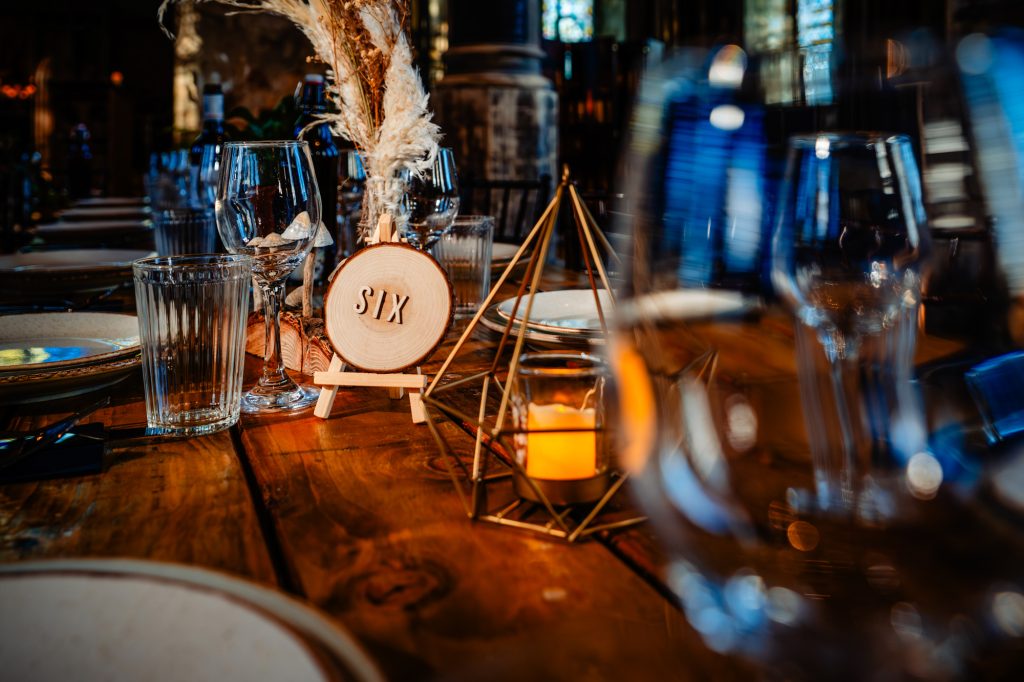
If you are starting from a blank page, a base of one deep colour, one neutral, and one metallic is the simplest formula that consistently works.
Alternative palettes if you do not want red and green
If December weddings make you think of Christmas dinner table settings, you are not alone. Plenty of couples want a winter wedding that has nothing to do with the festive season.
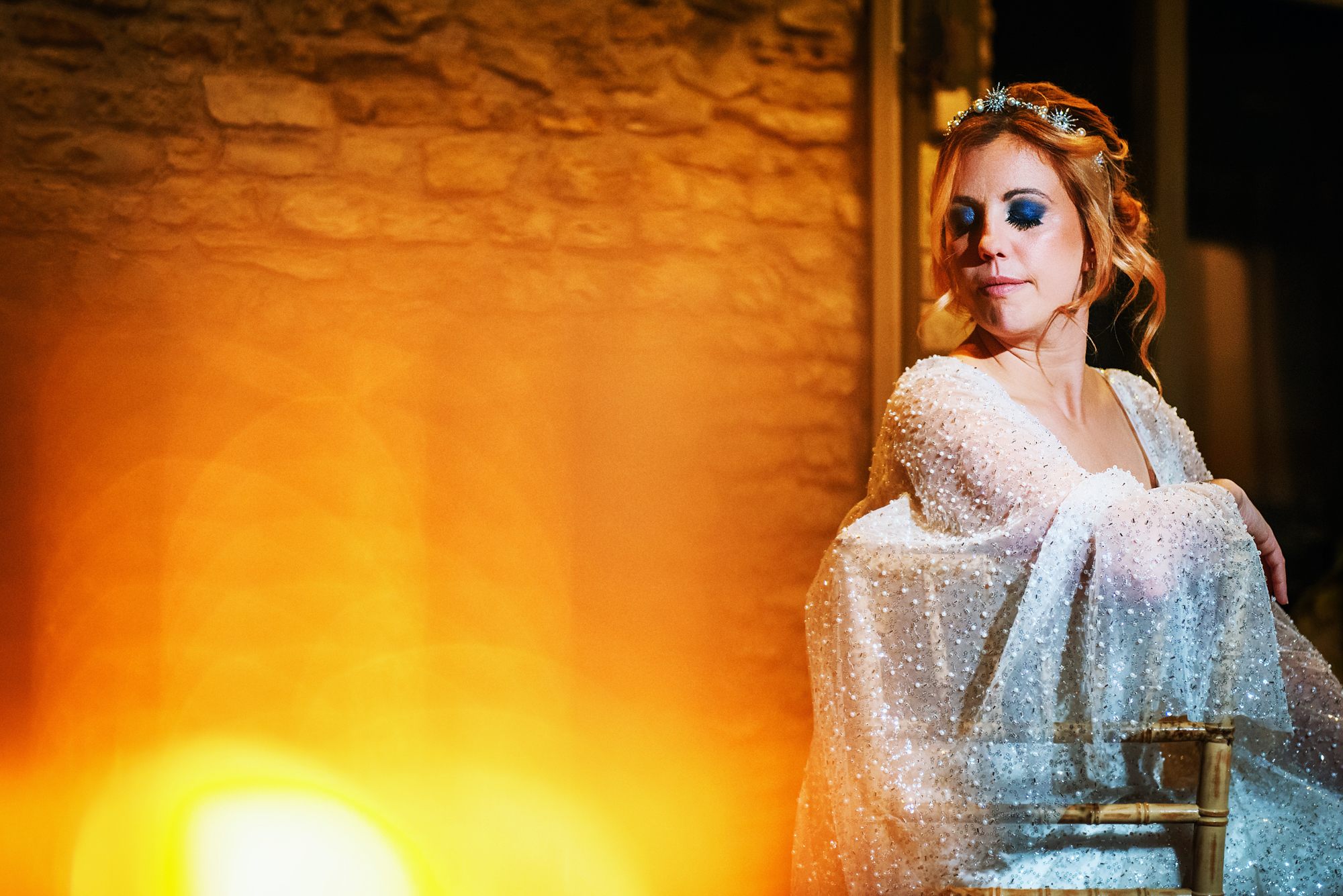
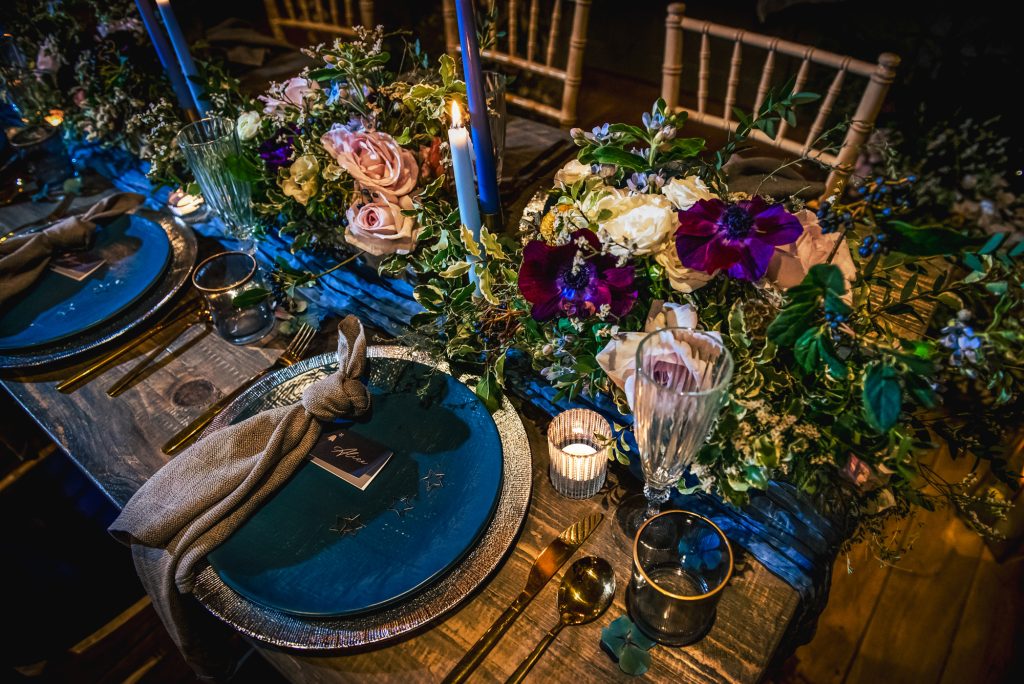
Deep blue and gold is one of my favourites. We shot a starry night winter wedding editorial at Folly Farm, built entirely around celestial blues, candlelight, and pearl details. No red. No green. No frosted anything. It was featured on Boho Weddings, and it is still one of the cleanest examples I have of a winter palette that breaks the default.
Other directions that work: black and ivory with brass, monochrome whites with greenery, soft terracotta with cream, or pastels that lean into the cold rather than fighting it.
How colour actually reads in low winter light
One thing worth knowing: colour reads warmer in candlelight than in daylight. A pale pink looks coral. A cool grey looks beige. A bright white looks creamy.
If your venue is candlelit for most of the day, factor that in when you are choosing flowers, outfits, or table linens. Look at swatches under the kind of light you will actually be in, not under the bright LEDs of a shop or showroom. This is the kind of detail that gets missed in the planning stage and only becomes obvious in the photos.
Will My Wedding Photos Look Dark?
This is the worry that comes up in almost every winter wedding enquiry. Short answer: No, not if the photographer knows how to work in low light. A longer answer is more useful.
What documentary photography looks like in low light
Documentary photography depends on natural light far more than posed work does. The whole point is to stay out of the moment and let it happen. So when the light drops, the photographer needs to be able to keep working without setting up flash for every frame.

I came to wedding photography from photojournalism. Newsrooms taught me to find the shot when the light has already gone, at protests, at evening news events, in candlelit interiors. That training is what makes low-light documentary work possible. You learn to read the light that is there, not the light you wish you had.
Where flash belongs on a winter day, and where it does not
Flash has its place. For posed group photos after dark, for first dances, for confetti shots in evening light, flash is the right tool.
But for ceremony coverage, drinks reception, and the in-between moments during dinner, flash flattens the room. It overpowers the candlelight that everyone spent so much time setting up. The challenge in winter is not learning to use flash. It is learning when not to.

A photographer who reaches for flash automatically the moment the light drops will produce technically clean photos that look nothing like the wedding you actually had.
What to ask a winter wedding photographer before booking
3 useful questions:
- Can you show me at least 2 full galleries from weddings you have shot in December or January?
- How do you handle low light during the ceremony itself, especially if flash is not allowed?
- What is your approach to balancing documentary coverage with portraits when daylight is limited?
The answers tell you whether the photographer has actually worked through a winter wedding before, or whether they are about to learn on yours.
Bristol and Somerset Venues That Suit the Season
Not every venue handles winter well. Some are designed for summer garden parties and lose half their appeal once the light fades. Others come into their own in November.
Here is what I look for when couples ask me whether their venue will work for a winter wedding in Bristol or Somerset.
What to actually look for in a winter venue
3 things matter more than anything else: indoor space that holds its own atmosphere, multiple light sources you can layer (candles, lamps, fairy lights, fireplaces), and a layout that works without spilling guests out.
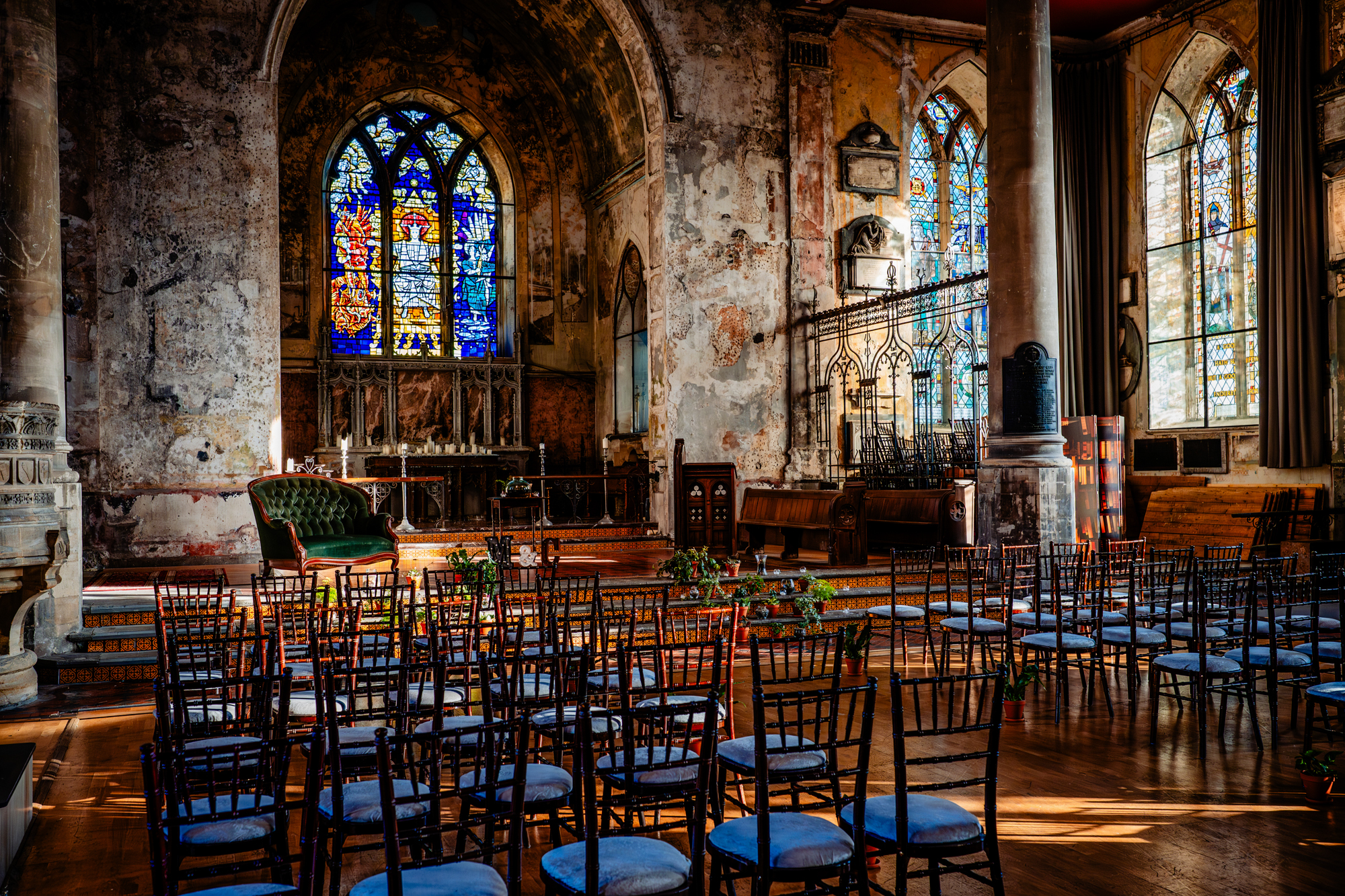
Window light is the underrated one. Even in December, a venue with large south-facing windows will provide usable natural light throughout the ceremony and into the early afternoon. A venue with small windows or heavy curtains will not, no matter how good the photographer is.
The venues I have seen handle short days well
Folly Farm in Somerset is probably the venue I would recommend first for a winter wedding. The stone barn handles candlelight beautifully; there is enough indoor space for a full day without the outside being a make-or-break, and the team understands the season. It is also where we shot the starry night winter editorial I mentioned earlier.
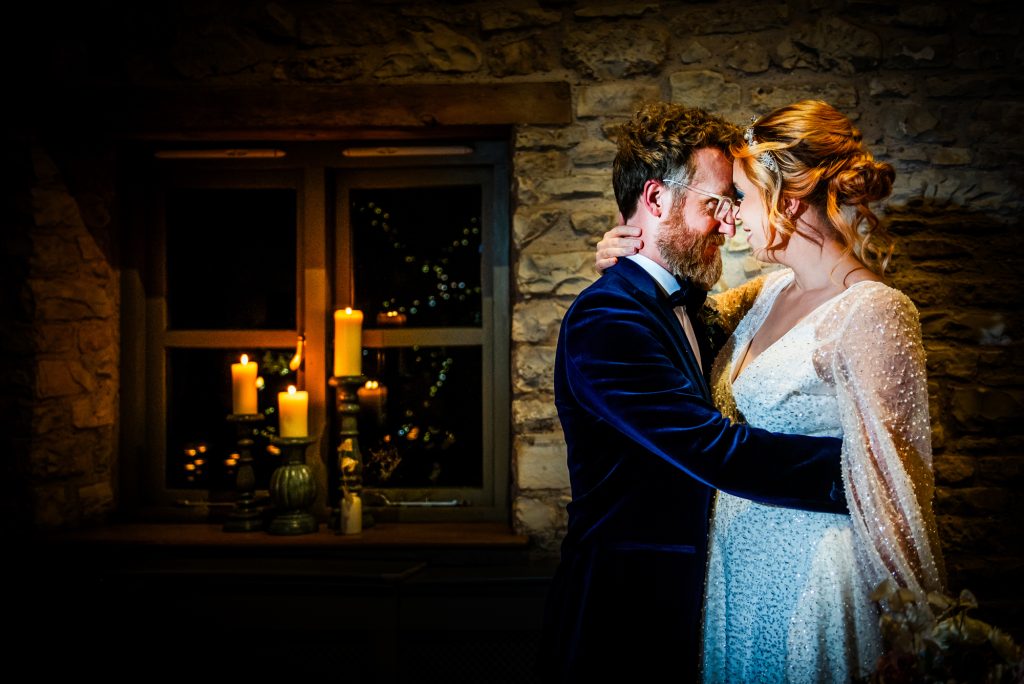
Beyond Folly Farm, barn wedding venues across Bristol and Somerset are generally a safer choice for winter than open-grounds country houses. Barns are designed for atmosphere. They suit the season.
Indoor space, fires, and the practical bits
A few practical things to ask any venue before booking a winter date:
Is there a clear plan for guests with winter coats, somewhere to leave them that does not become chaos at the end of the night?
Are the heating and the fires actually running throughout the day, or are they switched on an hour before guests arrive?
Is there a fallback plan for outdoor portraits if it is raining or very cold?
Good venues have answers to these without having to think. The less good ones improvise.
Ready to start
Planning Your Winter Wedding?
Hi, I’m Eszter, a wedding photographer in Bristol. I photograph weddings in a calm, natural way so you can stay present with the people you love, without feeling watched or pulled away.
A winter wedding might come with extra questions. Light, timing, weather, whether the photos will feel like the day. But what matters more is how the day actually flows and how it feels as it happens. When things are calm and unforced, the short winter daylight stops feeling like a constraint. It starts feeling like the thing that gives the whole day its atmosphere.
My role is simply to be there with you, notice what matters, and document it without interrupting the experience. Whatever the light is doing.
Because your wedding is not something to manage. It is something to live.
If you are planning a winter wedding in Bristol, Somerset, or anywhere across the UK, I would love to hear about your day.
Our related guides
Let’s start our journey
Start by filling in the enquiry form, and we’ll take it from there. Don’t worry, you don’t need everything planned out yet. That’s why we are here, to help you on the way!
Hit send, and I’ll be in touch within 2 working days (I promise).
