
How to Plan a Wedding Day Timeline
How to plan a calm, well-paced day
A wedding day timeline is one of those things that can seem boring at first.
Until you realise it shapes almost everything.
It affects how your morning feels. How much time you get with your guests. Whether you end up rushing through portraits. Whether dinner starts late. Whether the whole day feels smooth or slightly chaotic.
The good news is that your timeline does not need to be perfect.
It just needs to make sense for your day.
Some couples want a slow morning and a relaxed ceremony. Some want loads of time with guests, and some want a later start and a proper party. There is no single right way to do it.
But there is a difference between a timeline that supports the day and one that quietly works against it.
In this guide, I’ll walk you through what a wedding day timeline usually looks like, what often gets underestimated, and how to plan a day that feels calm, realistic, and actually enjoyable to live through.
Why Your Wedding Day Timeline Matters
A good wedding day timeline is not about turning your day into a military operation.
It is about giving the day room to breathe.
Without a rough plan, small delays can start stacking up. Hair and makeup run late. Guests take longer to sit down. Group photos take more time than expected. Dinner gets pushed back. Suddenly, the whole afternoon feels rushed.
A strong timeline helps with things like:
- keeping the day flowing well
- making space for quiet moments
- giving suppliers enough time to do their jobs well
- helping you enjoy the day instead of constantly checking the clock
- creating better light and better conditions for photos
This matters more than many couples realise.
The best wedding days usually do not feel packed from edge to edge. They feel balanced. There is movement, but there is also space. Things happen when they need to happen, without every minute being squeezed dry.
That is usually the sweet spot.
What a Typical Wedding Day Timeline Looks Like
Every wedding is different, but most days follow a similar shape.
It usually looks something like this:
| Guests sit down, food is served, and speeches happen | What usually happens |
|---|---|
| Morning | Hair, makeup, getting dressed, details, quiet prep |
| Before ceremony | Travel, final touch-ups, guests arrive |
| Ceremony | The legal bit, the emotional bit, the bit where it becomes real |
| After ceremony | Confetti, hugs, drinks, group photos |
| Afternoon | Couple portraits, canapés, mingling, room turnarounds if needed |
| Meal and speeches | Guests sit down, food is served, speeches happen |
| Evening | Cake cut, first dance, party, more relaxed guest photos |
That is the general shape.
What changes is the timing.
A 1 pm ceremony will feel very different from a 3 pm ceremony. A winter wedding has a different light from a summer one, and also a city wedding differs from a countryside wedding, where everything happens in one place.
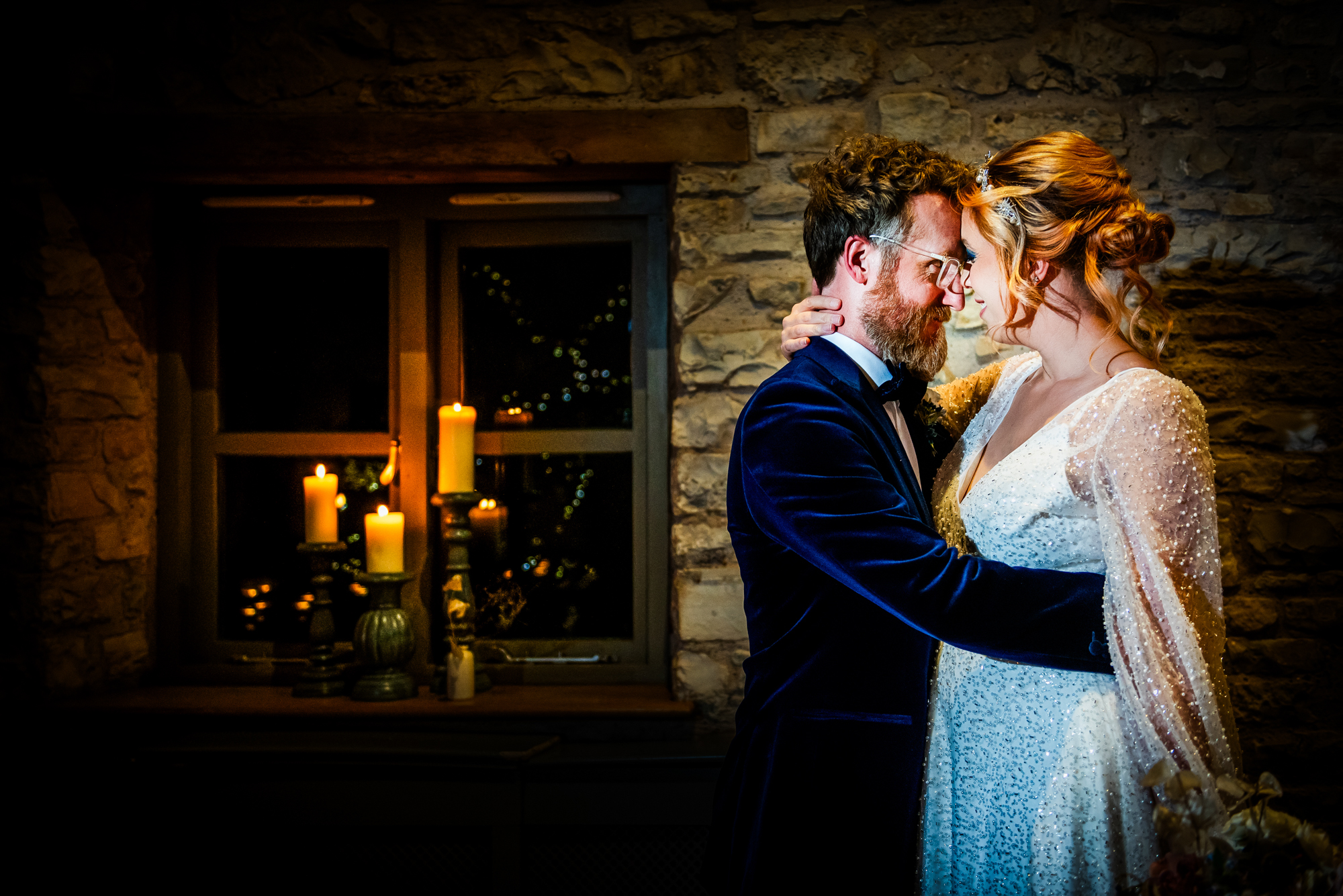
That is why copying someone else’s timeline word for word does not always work.
It is much better to use sample timelines as a guide, then shape your own around:
- your ceremony time
- travel between locations
- the season
- the sunset time
- whether speeches happen before or after food
- how important photos are to you
- how much unstructured time do you want with guests
A timeline should support the day you actually want, not just the day that looks good on paper.
A Sample Wedding Day Timeline for a 1 pm Ceremony
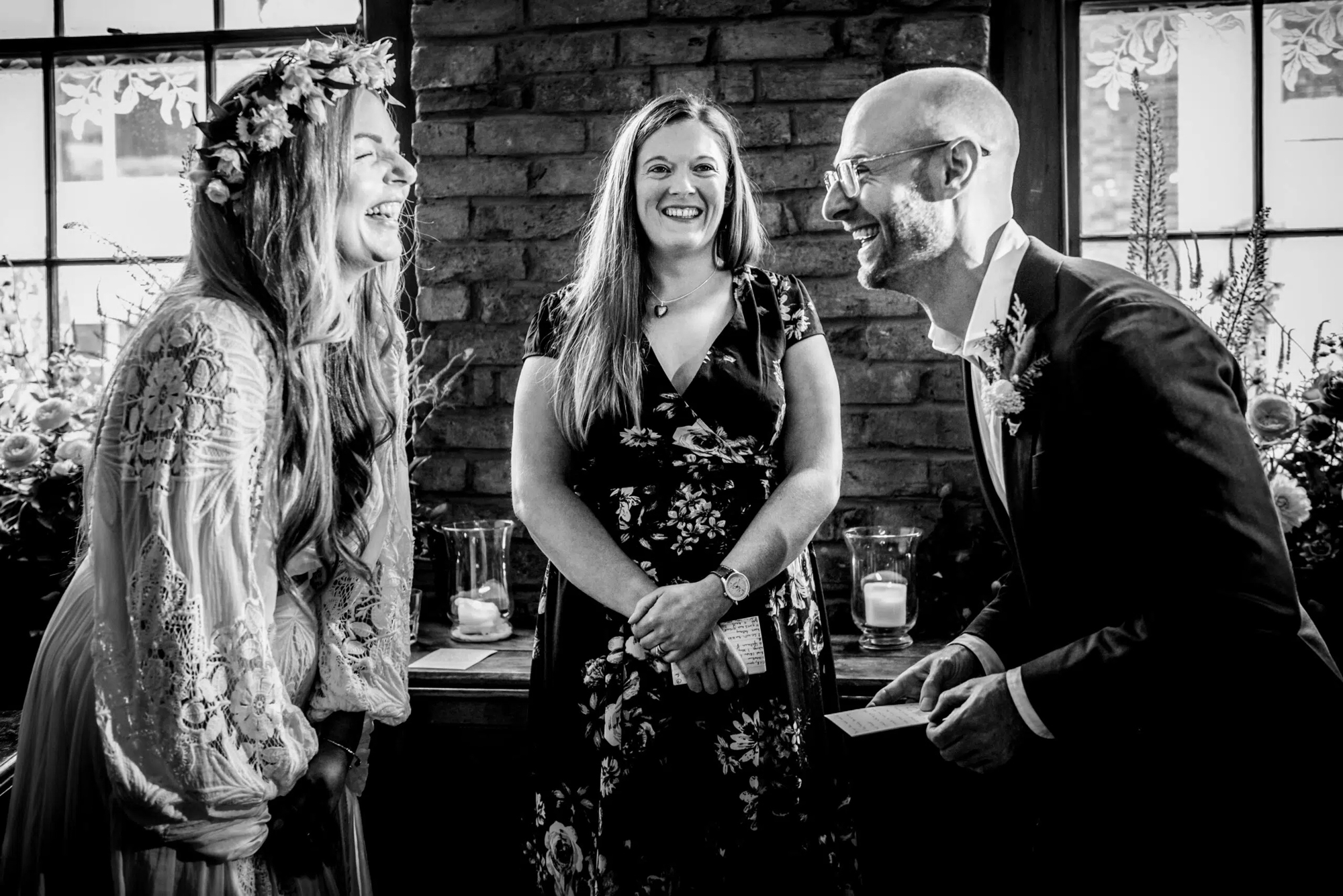
A 1 pm ceremony is very common in the UK. It gives you a relaxed afternoon and plenty of time for food, speeches, and dancing.
Here is what a typical day might look like.
| Hair and makeup begin | What happens |
|---|---|
| 7:30 – 8:00 | Hair and makeup begins |
| 10:30 | Getting dressed |
| 11:30 | Final prep photos and travel to ceremony |
| 12:30 | Guests arrive |
| 13:00 | Ceremony |
| 13:30 | Confetti and congratulations |
| 14:00 | Drinks reception and group photos |
| 15:30 | Guests invited to dinner |
| 16:00 | Wedding breakfast |
| 17:30 | Speeches |
| 18:30 | Couple portraits or sunset photos |
| 19:30 | Cake cut and first dance |
| 20:00 onwards | Evening party |
Of course, every wedding is a little different.
Some couples prefer speeches before the meal, and some move straight into dancing. Some skip group photos completely and spend more time with guests.
The timeline simply helps everything move naturally from one part of the day to the next.
One thing many couples forget is buffer time.
Guests take longer to sit down. Family members wander off. Someone always wants one more photo. Small gaps in the timeline help everything feel relaxed instead of rushed.
A Sample Wedding Day Timeline for a 3 pm Ceremony
A later ceremony creates a different rhythm for the day.
The morning feels slower, but the afternoon becomes more condensed.
Here is a typical example.

| Time | What happens |
|---|---|
| 9:30 | Hair and makeup begins |
| 12:30 | Getting dressed |
| 13:30 | Portraits or quiet prep time |
| 14:30 | Guests arrive |
| 15:00 | Ceremony |
| 15:30 | Confetti and drinks |
| 16:00 | Group photos and mingling |
| 17:30 | Guests sit down for dinner |
| 18:00 | Wedding breakfast |
| 19:30 | Speeches |
| 20:30 | First dance |
| 21:00 onwards | Evening party |
Later ceremonies often mean less daylight for portraits, especially in autumn or winter.
That does not make them worse, but it does mean planning the photo timing a little more carefully.
Sometimes couples choose to take a few portraits earlier in the day or step outside briefly after dinner when the light softens.
These small choices can make a big difference.
Wedding Timeline Tips From a Photographer
After photographing many weddings, certain patterns appear again and again.
Some timelines flow beautifully. Others feel slightly rushed.
The difference usually comes down to a few small details.
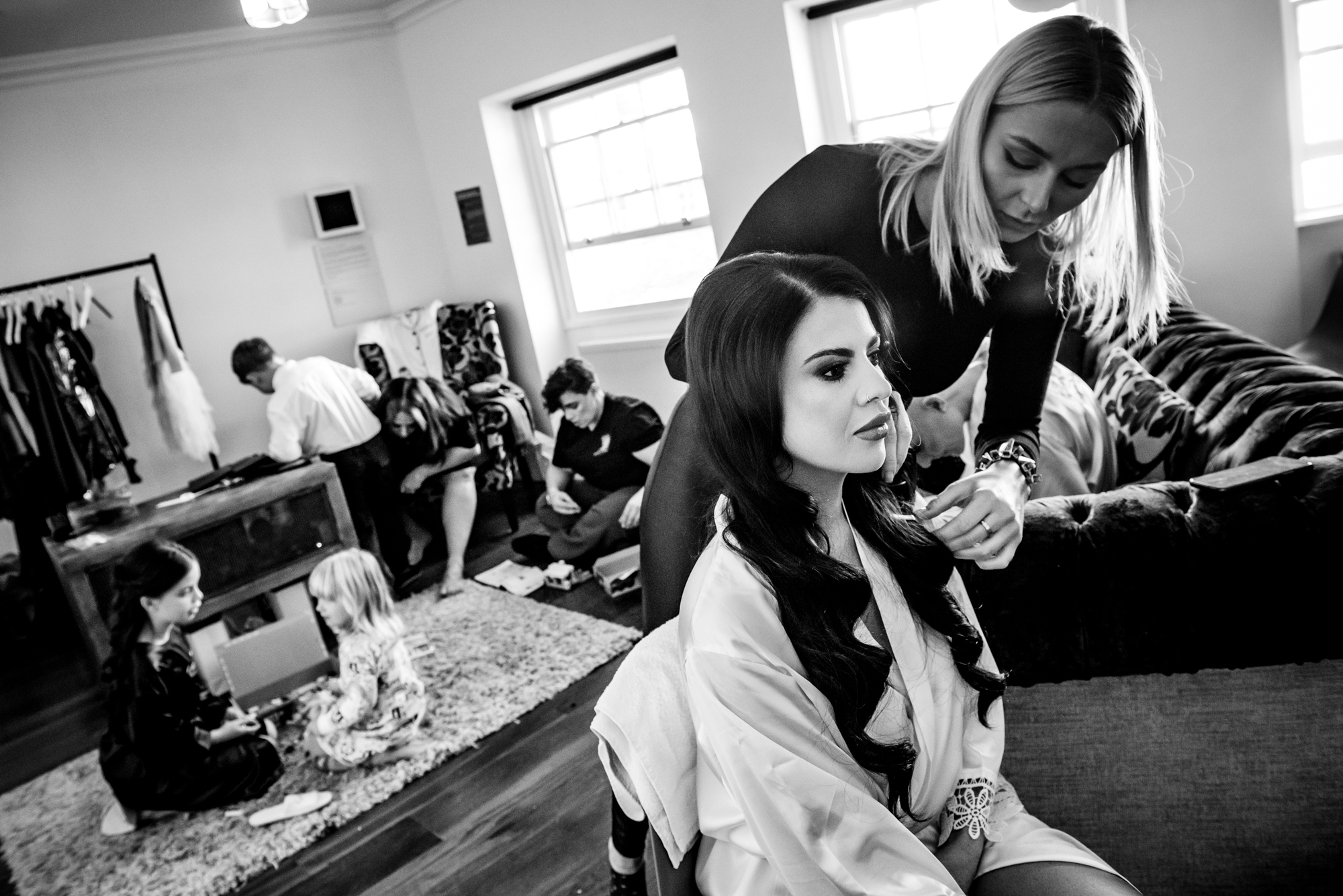
Leave space in the morning
Hair and makeup almost always take longer than expected.

Starting a little earlier keeps the morning calm. It also means nobody is rushing while getting dressed.
Those quiet moments before the ceremony often become some of the most meaningful parts of the day.
Do not underestimate the drinks reception
Drinks receptions often feel like they fly by.
But they are actually doing a lot of work at once:
- guests catching up
- group photos happening
- couple portraits
- Guests finding seats for dinner
Allowing 90 minutes to two hours usually works well.

Plan portraits around the light
The softest light often appears close to sunset.
This is when many couples step away together for ten or fifteen minutes.
It can be a quiet pause in the middle of the celebration and often produces some of the day’s most beautiful images.

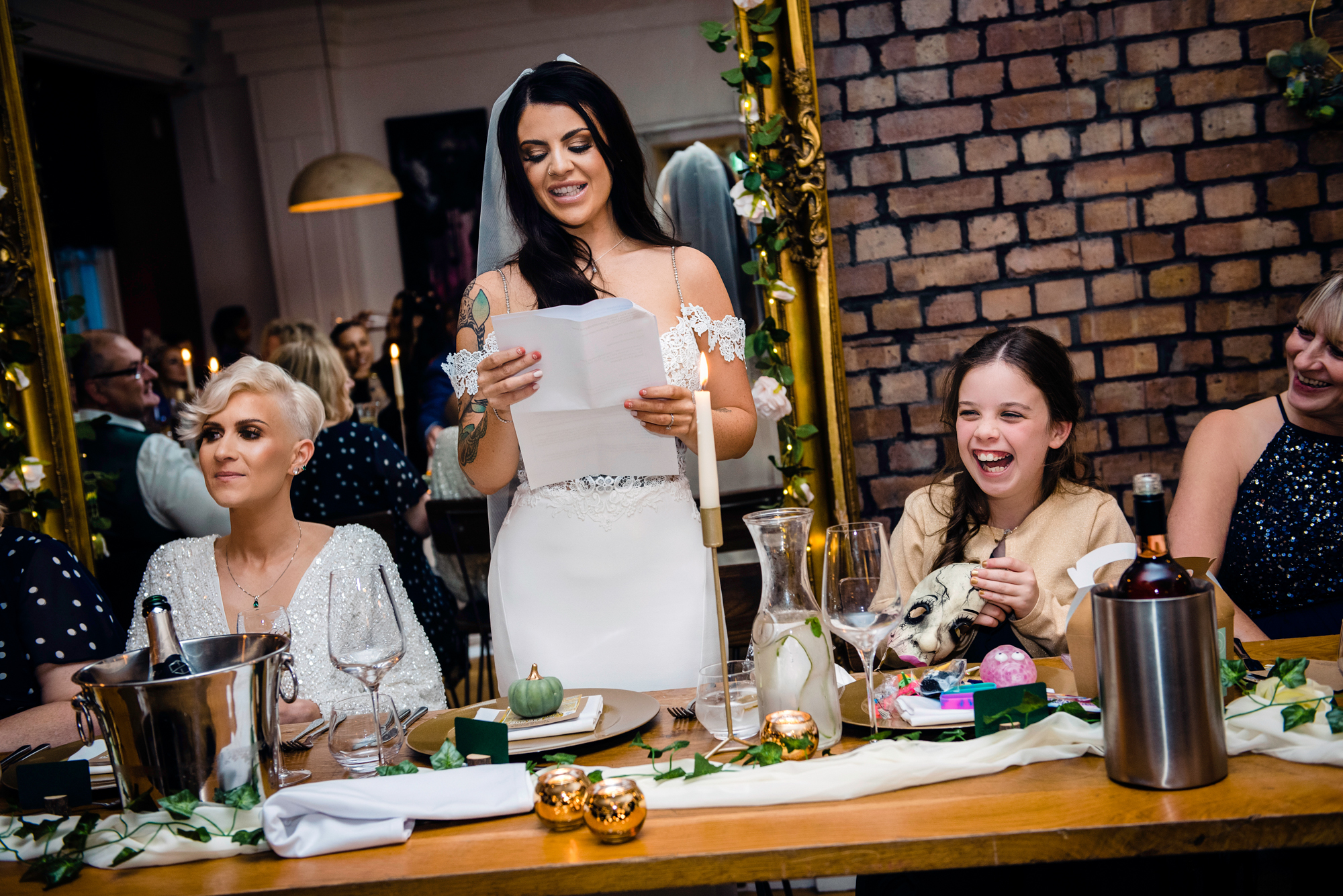
Give speeches enough time
Speeches can be wonderfully emotional and funny, but they rarely stay short.
Planning for 30 to 45 minutes helps prevent dinner from running late.
Built-in breathing room
Even the best timelines shift slightly.
Adding small buffers keeps the day flexible.
It means that if something runs ten minutes late, the rest of the day can still feel relaxed.
Mistakes That Can Throw Off a Wedding Day Timeline
Some timeline issues recur during wedding planning.
Avoiding them can make the whole day smoother.
Trying to fit too much into the morning
The morning should feel calm.
Packing it with travel, outfit changes, or multiple locations can make it feel rushed before the ceremony even begins.
Scheduling group photos without a plan
Group photos are quick when everyone knows where to be.
They take much longer when guests wander off.
Creating a short list of the most important group combinations keeps things efficient.
Leaving no space between events
If everything is scheduled back-to-back, even a small delay can cause a chain reaction.
Short gaps between events keep the day flowing.
Forgetting about sunset
In winter, sunset can arrive very early.
When building your timeline, check the sunset time (which you can easily find here) and make sure you do not miss the best light of the day.

How to Build a Wedding Day Timeline That Works for You
The best timelines are not copied from someone else’s wedding.
They are shaped around the day you want to have.
Start with a few key questions:
- What time is the ceremony?
- Is everything happening at one venue?
- When does the sun set?
- Do you want speeches before or after dinner?
- How important are couple portraits to you?
Once those pieces are clear, the rest of the timeline usually falls into place.
Many couples also find it helpful to speak with their venue, planner, and photographer while building the schedule. Each supplier sees the day from a slightly different perspective, and together it becomes easier to create something that feels natural and relaxed.
Our related guides
Ready to start planning
your wedding day timeline?
Trying to figure out how the day should flow?
Hi, I’m Eszter. I don’t just photograph weddings. I help couples create a day that feels calm, natural, and truly enjoyable, so you can stay present with the people who matter most.
For many couples, the timeline is where everything begins to make sense.
A relaxed morning with space to breathe.
A ceremony that doesn’t feel rushed.
Time for hugs, conversations, and the little moments that happen in between.
When the day flows well, everything feels different. You’re not watching the clock. You’re actually living the day.
My role is simply to notice those moments as they unfold and document them in a way that feels honest and natural.
If you’re planning a wedding and wondering how to build a timeline that keeps the day relaxed and beautifully paced, I’d love to hear about your plans.

Let’s start our journey
Start by filling in the enquiry form, and we’ll take it from there. Don’t worry, you don’t need everything planned out yet. That’s why we are here, to help you on the way!
Hit send, and I’ll be in touch within 2 working days (I promise).
Not ready yet?
Why don’t you download our Relaxed Wedding Blueprint first? You’ll find timeline tips, ways to avoid the awkward photo stress, and small adjustments that make a big difference in your day.